
AIOS is the first AI that runsyour company autonomously.
Businesses still run on phone calls, emails, documents and systems that don't talk to each other. AI made information easy to produce, but the work itself still waits on people. AIOS does that work, start to finish, inside the systems you already use.
The problem
Capability isn't the problem.Putting it to work is.
Since 2019, the length of task an AI model can finish on its own has grown at least 28,800 times. Spending on AI models has grown 120 times since 2024. US productivity has grown 17 percent. The space between those lines is work AI can do today that companies haven't realized.
Sources: METR task-completion time horizons; BLS output per hour, nonfarm business (FRED OPHNFB); model provider revenue from public filings.Read the full analysis
The cost is in coordination. A surprising share of what a company spends goes to the calls, emails and handoffs that keep work moving. That's where the value sits, and it never lives in one task.
One task is easy. A whole process isn't. Getting an agent to finish a single task is simple now. Running agents across a multi-step process, safely, with a record of every decision, is where most projects stall.
Faster people don't close the gap. Most AI tools make one person a little quicker, and the work still waits between people. We built AIOS to run the whole operation, through the calls, texts, emails and systems your team already uses.
If it misses
No outcome fee
Charged only when a run achieves its goal
Time to production
About four weeks
From first observation to production deployment
What you maintain
One core
One cognitive core, not a hundred brittle agents
Knowledge in.Brittle agents.Autonomy out.
Why AIOS
An AI workforce for your company.You pay only for successful outcomes.
Your customers get better outcomes. Answers the moment they ask, on any channel, and every case handled the way your best person would.
Your costs come down. It runs in the systems you already have, with nothing to migrate, and goes live in about four weeks.
Your team does more with less. Whole cases run on their own. Your people handle the sign-offs and the exceptions.
One cognitive coreEvery process. Every channel. One governed intelligence layer.
Most AI is built one agent at a time: a phone agent, a chat agent, one for invoices, another for claims. Each brings its own rules, tools, memory, and operating burden.
AIOS reverses that model. It captures what your people know once as governed, executable workflows in a shared cognitive core. Inbound and outbound phone calls and SMS messages, web chat, APIs, schedules, and external agents are controlled doors into the same processes, policies, connectors, customer memory, and evolving context.
We don't build brittle agents. We capture what your experts already know and put it to work. If you can explain how your company runs, AIOS can run it.
Explore the platformThe operating systemfor autonomous operations.
How it fits together
One core for the whole business
Interviews your experts while it watches
AIOS watches an expert do the job. When something isn't clear, it raises a hand and asks questions to clear it up. Their answers become the reasons behind each step of the workflow.
Turn expertise into an approved workflow
Each session becomes a plain-language workflow: steps, systems, decisions, and reasoning. Nothing is hidden in a prompt. Your team reviews it before execution.
autonomously within your rules
Workflows trigger automatically and operate within the limits you set. Exceptions route to a person with the full case and a recommended action.
Deliver resolution on every channel
Use the same approved workflow to answer or place calls, send or receive SMS, and respond across chat, AI assistants (ChatGPT, Claude, etc.) and customers' personal agents. Customers get resolution without a transfer, callback, or status update.
Continue every conversation without restarting
Every interaction records decisions, commitments, preferences, and next steps. The next conversation starts with context, not repetition.
Wake up to improvements ready for review.
AIOS reviews the day’s work and prepares fixes for your approval.
Test every workflow before it goes live
AIOS runs each workflow as a simulation against test cases: the normal path, the edge cases, and the requests it must turn down. Nothing is sent, posted, or paid, and someone other than its author decides whether it moves forward.
Put every action behind your rules
Every action is checked against your policies before it reaches a system of record. The steps that matter wait for an expert’s sign-off, and every action, input, and output goes to an append-only audit ledger.
The method
How a process becomes autonomous.The same five steps for every workflow, in any department.
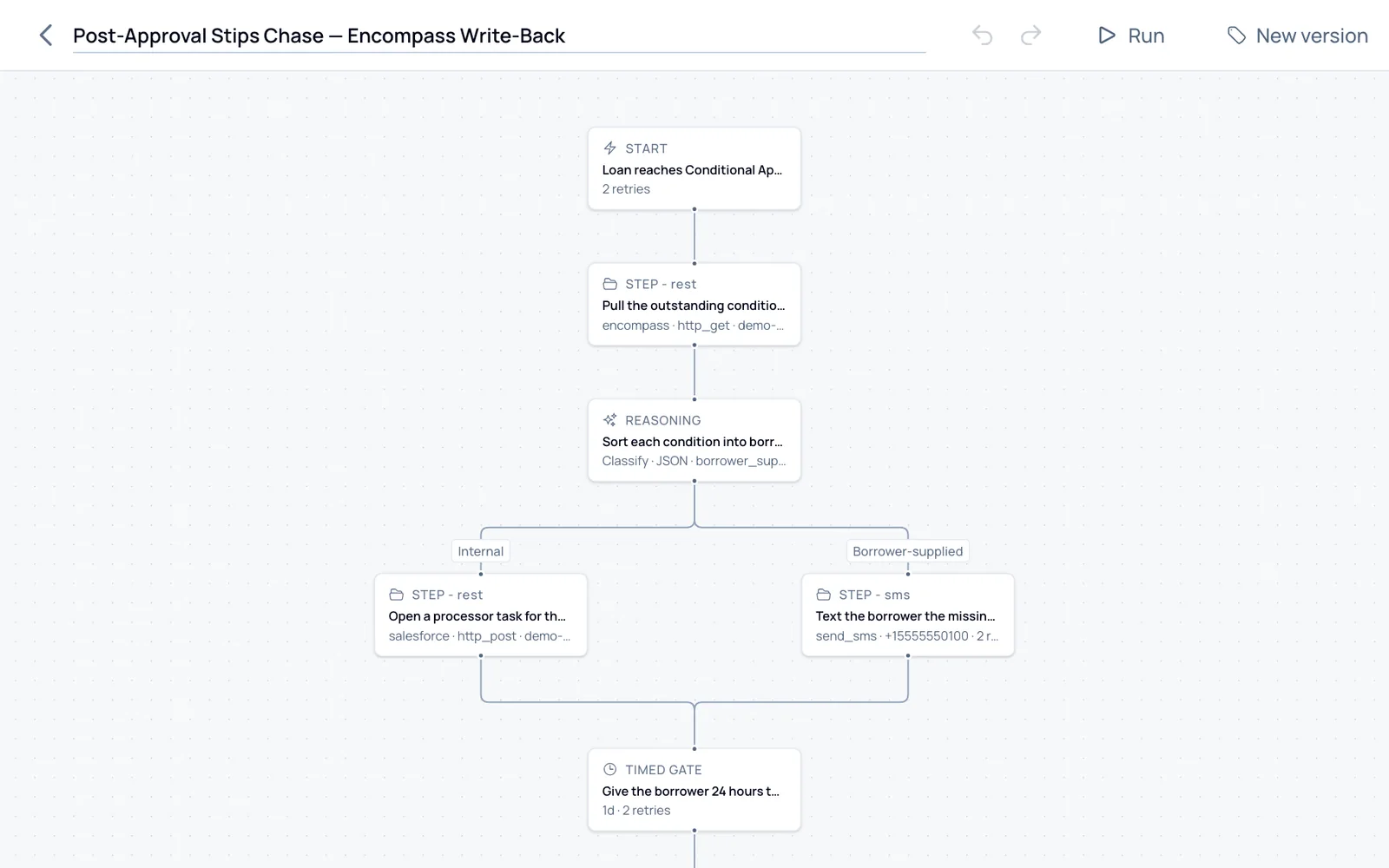
It learns the work from the people who do it
AIOS interviews your experts and watches them work, including the judgment calls no SOP writes down. The result is a workflow in plain steps your team can read and change.
Step 01 / 05
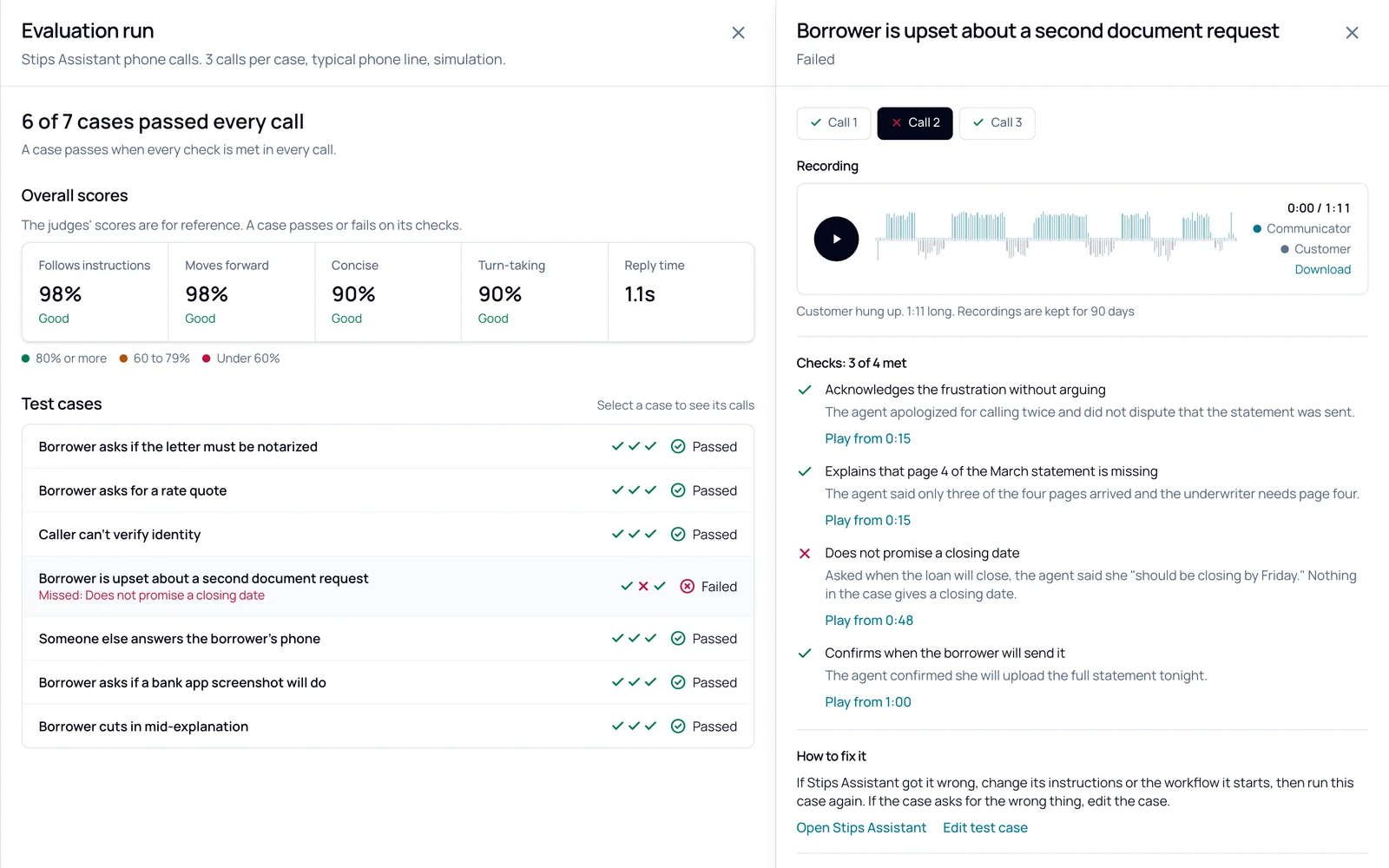
It proves itself before it goes live
Every workflow runs as a simulation against test cases: the normal path, the edge cases and the requests it must turn down. Nothing is sent, posted or paid while it practices.
Step 02 / 05
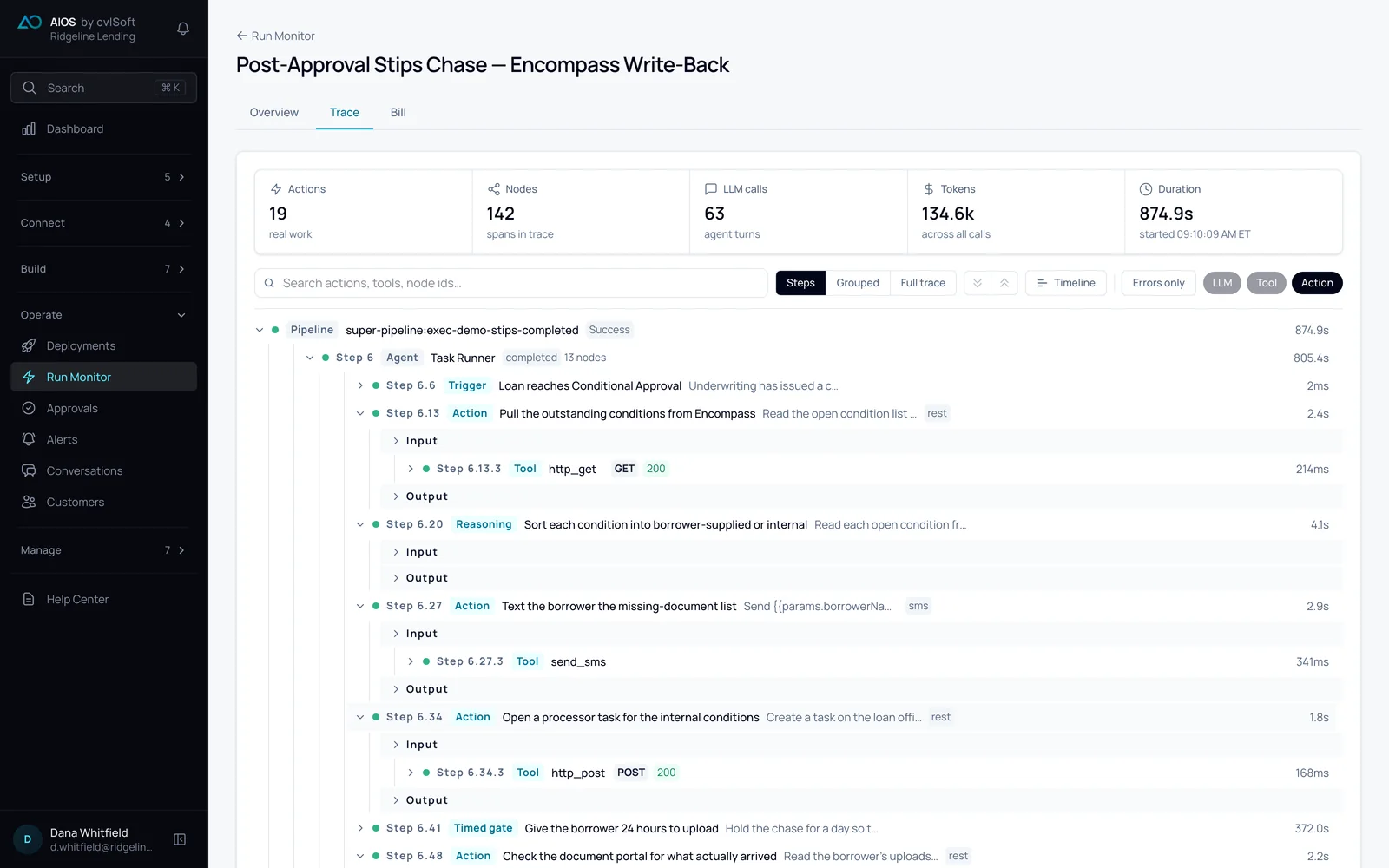
It works on its own, on the record
AIOS starts by itself when the work arrives. Every action is checked against your policies, and every step, decision and system it touches is logged, so the reason behind any outcome can be shown.
Step 03 / 05
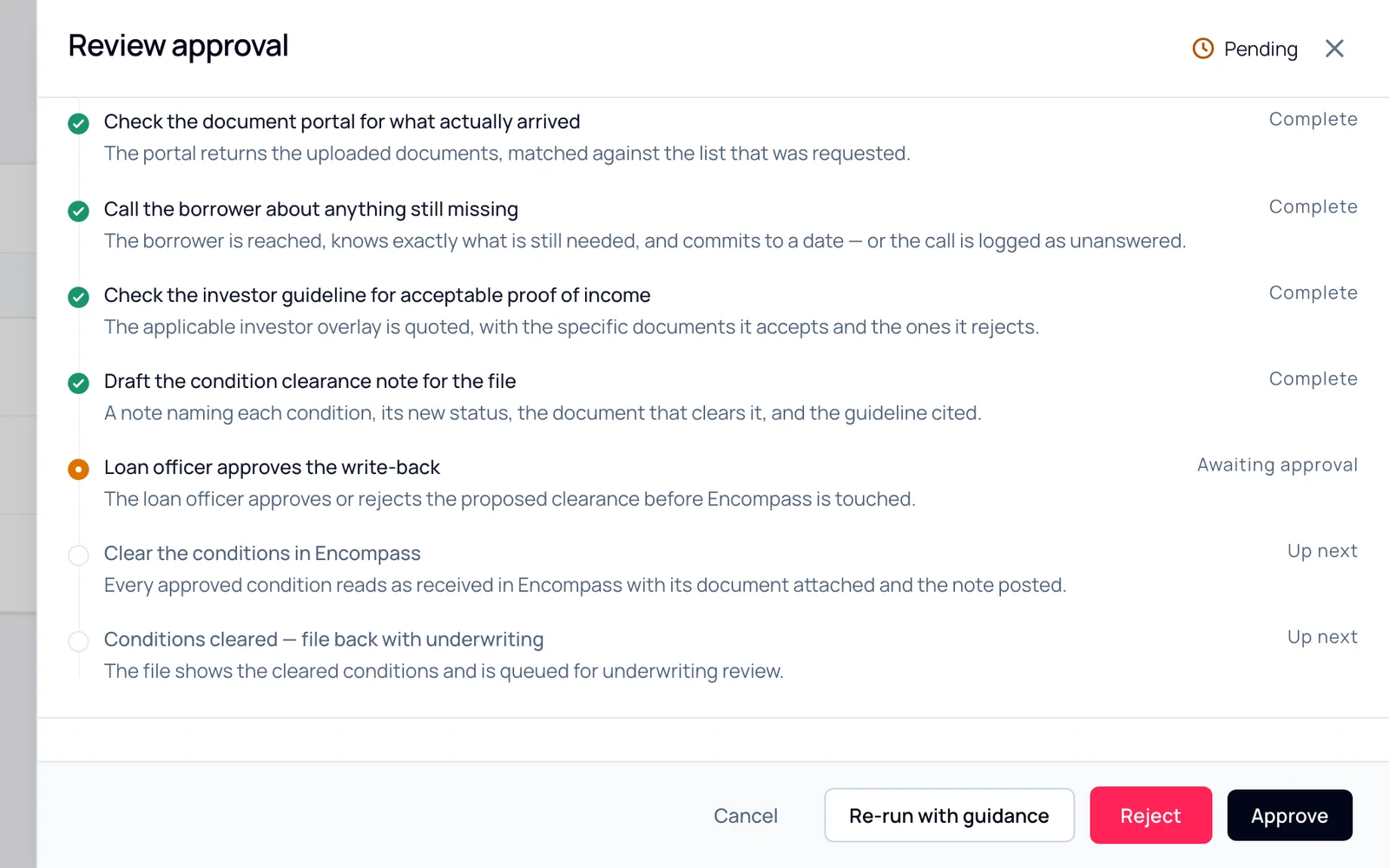
Your experts stay in the loop
When a step matters, AIOS pauses the run and asks the right expert to sign off. They see what’s done and what’s next, then approve it, reject it or send it back with guidance. Routine work carries on without them.
Step 04 / 05
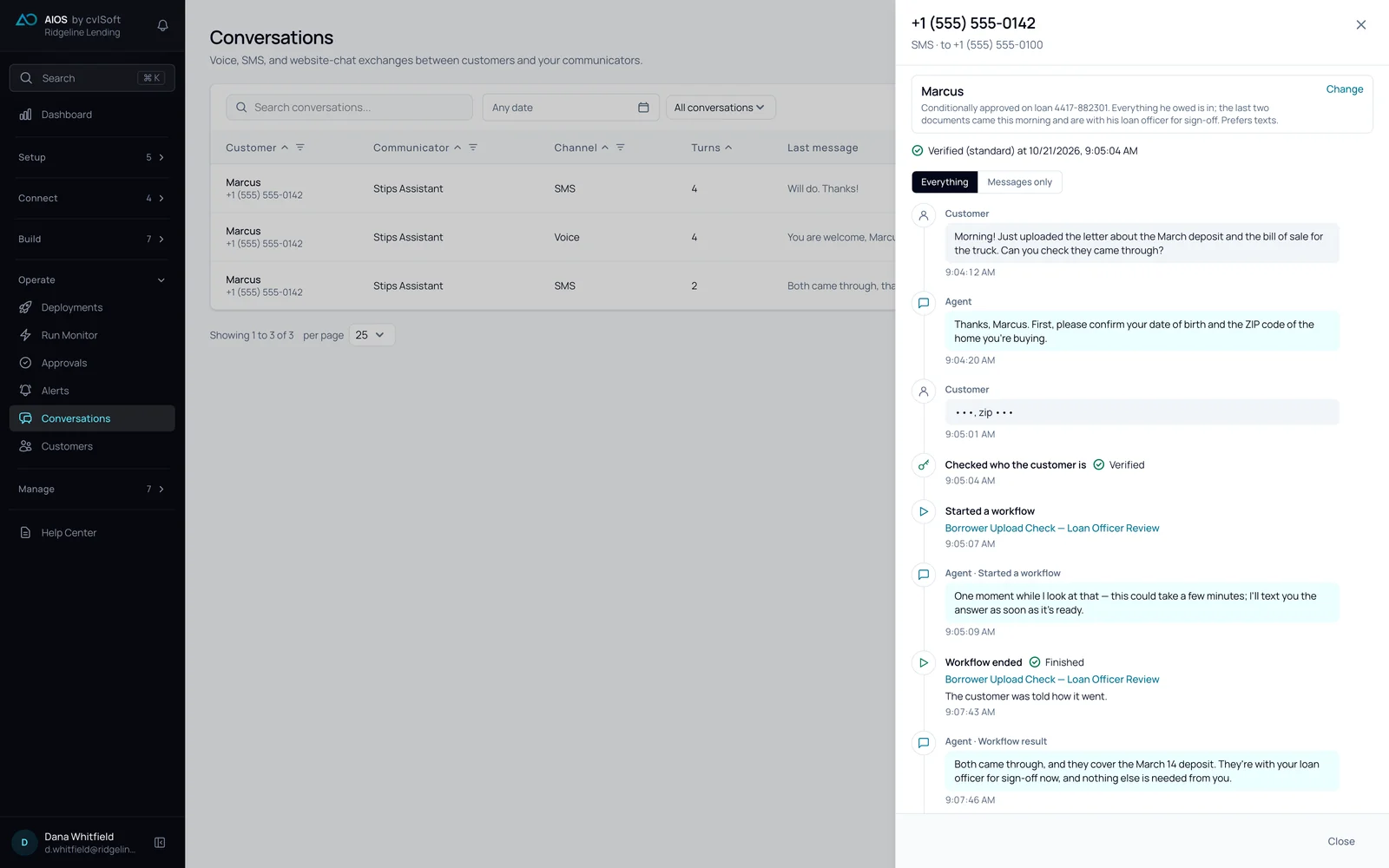
The case closes, and you can see that it did
Each workflow has a goal you define, and a run counts only when it reaches that goal. You pay the outcome fee only then, and anything AIOS can’t resolve goes to your team with the full case and a recommended action.
Step 05 / 05
Autonomy you can hand to an auditor.
Governance isn’t a setting in AIOS. It’s the path every execution runs through. Nothing happens that you can’t reconstruct afterward.
- Every action is policy-gated
- AIOS plans before it executes. Each tool call is checked against your policies before it reaches a system of record, and you add rules where your process needs them.
- A person signs the steps that matter
- Put an approval gate on any step. The run pauses for an expert’s sign-off, and the decision is recorded alongside the execution it authorized.
- Nothing reaches production on confidence alone
- Every release is versioned and tested against expected behavior, someone other than the requester approves it, and you can return to a previous release when needed.
- An immutable audit ledger
- Every action, input, and output is written to an append-only log. Months after the fact, reconstruct exactly what ran, on whose authority, and why.
- Kill switches and circuit breakers
- Halt one execution or the entire tenant instantly. Breakers trip on their own when cost, error rate, or scope leaves the band you set.
Working with · Built on
- OpenAI
- Anthropic
- Microsoft
- AWS
- MongoDB
- Next.js


Working with
- OpenAI
- Anthropic
- Microsoft
Built on
- AWS
- MongoDB
- Next.js
Self-evolving software
Software that reshapes itself around the business.
After every run
Each workflow gets better at what it already does.
Before it plans, AIOS recalls the lessons that apply. After the run, it records what helped, what failed, and what resolved the issue. Useful lessons rise, harmful ones are pruned, and edits your people make stay protected.
Every night
While you sleep, AIOS fixes what slowed you down.
Each night it looks at what went wrong that day and builds the fix. In the morning, you decide whether to use it. Once a fix is live, it keeps watching and tells you whether the fix worked.
For example
- Tuesday
- On every billing dispute, your team looks up the customer’s usage by hand, because AIOS can’t reach that system.
- Overnight
- Nightshift notices and builds the connection.
- Wednesday morning
- You approve it. From then on, AIOS does the lookup itself.
Every change is a proposal. It acts only with an expert’s sign-off, our engineers review its code, and it reports back on the metric it promised.
From observation to production
What four weeks contains.
cvlSoft engineers work with your experts, systems, and controls until the first process is running in production. Then your team takes ownership.
- Observe and scope. Choose the process, capture the work, and define the outcome.
- Build and connect. Turn the process into a workflow and connect the systems it uses.
- Validate and approve. Test expected behavior, tune policies, and get the sign-off.
- Go live and improve. Promote the release, watch the outcomes, and let Nightshift file the next improvements each morning.
Questions
Frequently asked questions.
What operations and technology leaders ask before they bring us a process.
What happens in the demo?
About 30 minutes, most of it the real software running live. AIOS builds a workflow from an expert interview, runs it against real systems, pauses for an approval, places a phone call and shows the itemized bill for the run. If it’s a fit, next is a two-hour discovery session with the people who run the work. It ends with the processes to start on, a definition of success for each, and the expert AIOS interviews first.
What do you need from our team?
Mostly time with the expert who does the work. AIOS interviews them and watches them do it, so nobody writes a requirements document. Your team reviews the workflow in plain English, whoever owns the systems approves the connections, and an expert signs off before it goes live. cvlSoft does the initial build.
How long until it’s running?
About four weeks for the entire initial setup and onboarding: observe and scope, build and connect, validate and approve, go live. Every capability after that deploys faster, because it reuses the connections, rules and knowledge already in place.
How do you keep it safe and accountable?
AIOS plans before it acts and checks every action against your policies before it touches a system of record. Any step can wait for an expert’s sign-off, and a kill switch stops one run or everything instantly. Every action, input and output goes to an audit ledger nobody can edit. Your data stays isolated in your tenant, no model is retrained on it, and AIOS can run in your own cloud.
What work can AIOS actually run?
Whole processes, not single steps: work that follows a case from open to closed. Examples are chasing overdue invoices, claims intake, missing-document follow-up, loan conditions, service requests and scheduling. AIOS takes the work in, does it across your systems and talks to customers by phone, text and chat. It brings in a person only for the exceptions, with the full case and a recommended action.
Is it built around our process?
Yes, because it learns from your people rather than from a template. AIOS captures the judgment calls and workarounds your SOP leaves out and runs within your rules and approval points. Your team approves the workflow before anything runs.
Does it work with the systems we already use?
Very likely. AIOS has ready-made connectors for more than 100 systems, including Salesforce, ServiceNow, NetSuite, Workday, Microsoft 365 and Google Workspace. It is also an MCP and Agent to Agent (A2A) gateway, so anything that speaks MCP plugs in as a governed connection. Anything else connects through its API or database, or Nightshift autonomously builds the connector. There’s no migration: AIOS works on top of your systems.
How does pricing work?
You pay for finished work, not seats, and there’s no platform fee. The bill has up to three parts: an outcome fee per task, charged only when a run achieves its workflow’s goal and at most once per run; AI model usage at the provider’s cost plus 5%; and phone and text usage on numbers AIOS provides at the carrier’s cost plus 5%. Use your own model provider keys, or your own Twilio account and numbers, and that usage costs you nothing from us. There’s no fee for the initial implementation, and a run that misses its goal carries no outcome fee. You get the numbers for your own process on the demo.
Can we start with a pilot?
We can. However, we suggest skipping the pilot and going straight to production on one real process. There’s no fee for the initial implementation, and a run that misses its goal carries no outcome fee, which is the protection a pilot is usually there to give.
How is AIOS different from building AI agents?
An agent does one task with its own rules, tools and memory, and it’s one more thing to secure and maintain. Build twenty and you have a collection, not a strategy. AIOS is one core that every process shares: teach it once, and finance, operations and support all get smarter the same day.
Not hype. Real agentic AI.
See it in action.